Engineering Progress
Research moves through architecture, prototyping, test, and verification.
VAS develops technology through measured iteration. Public updates communicate the direction of the work while detailed design data remains protected.
News & Research Updates
VAS research spans physical systems, power, sensing, controls, autonomy, digital engineering, and AI assisted engineering. Updates are intentionally presented at a high level to protect proprietary implementation details while communicating the scope of ongoing technical development.
Engineering Progress
VAS develops technology through measured iteration. Public updates communicate the direction of the work while detailed design data remains protected.
Mobility Research
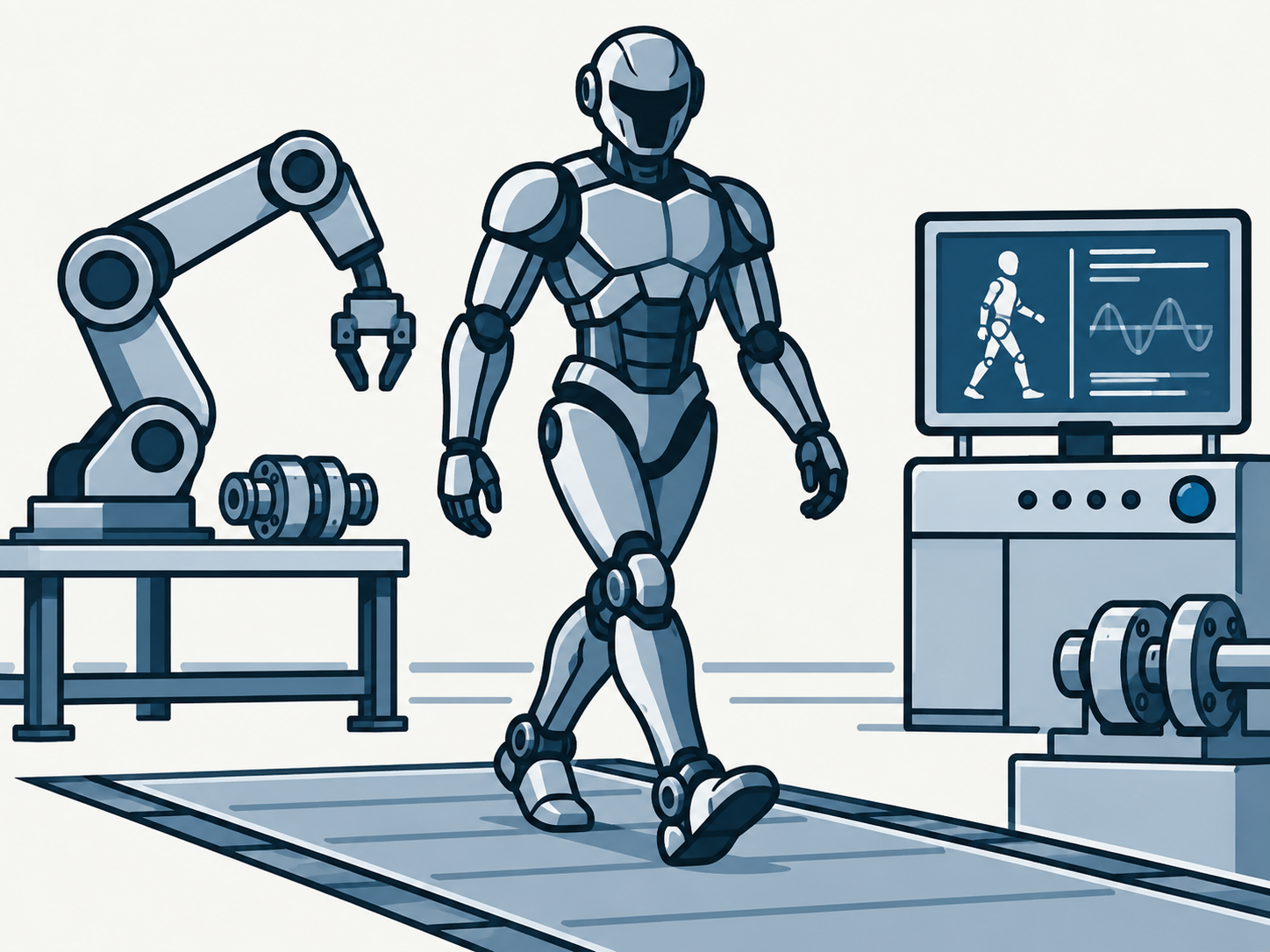
Representative visual for the mobility and control milestones documented below.

Power + Sensors
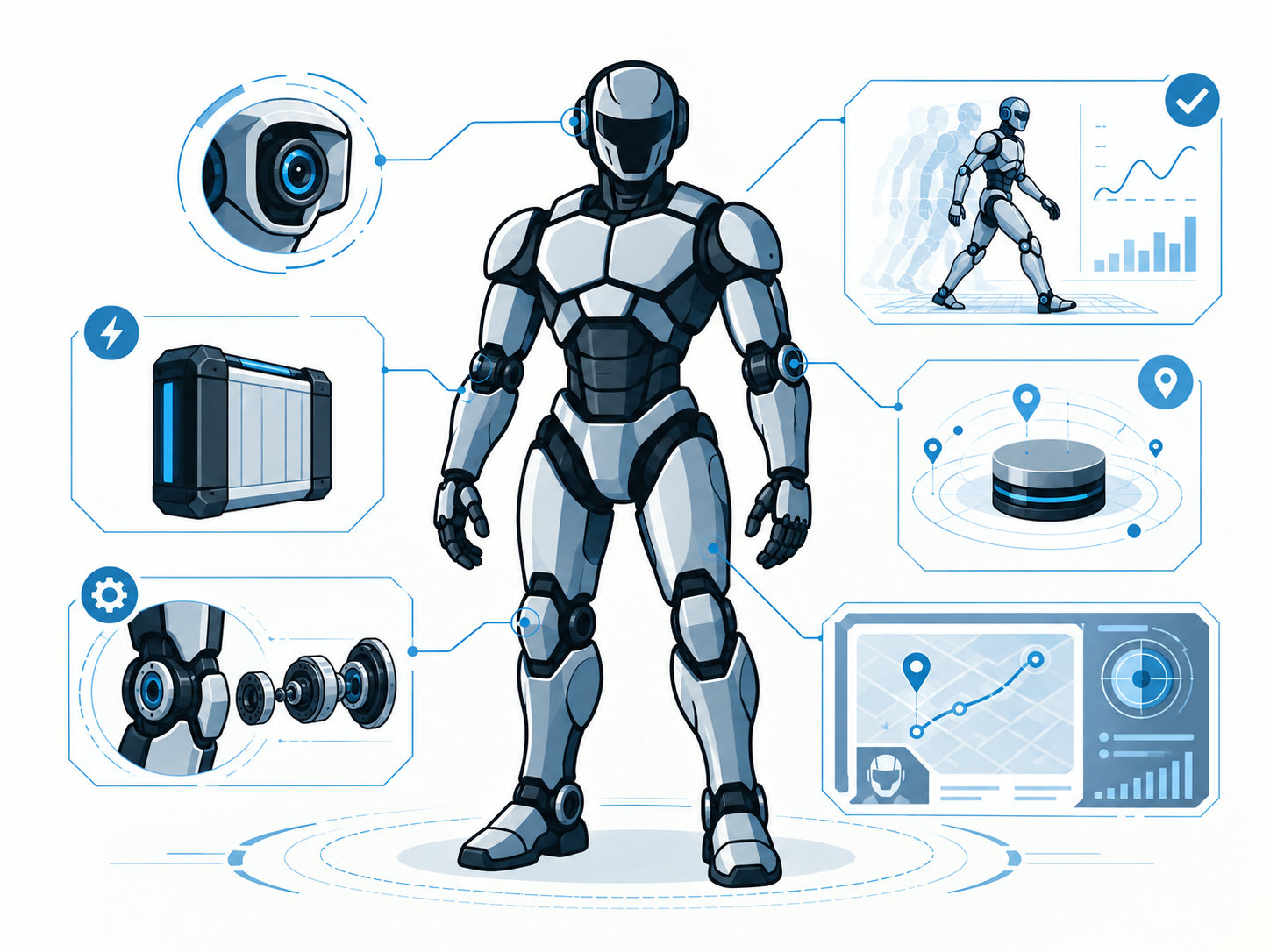
Representative visual for power architecture, sensor fusion, and autonomy related updates.
Engineering Acceleration
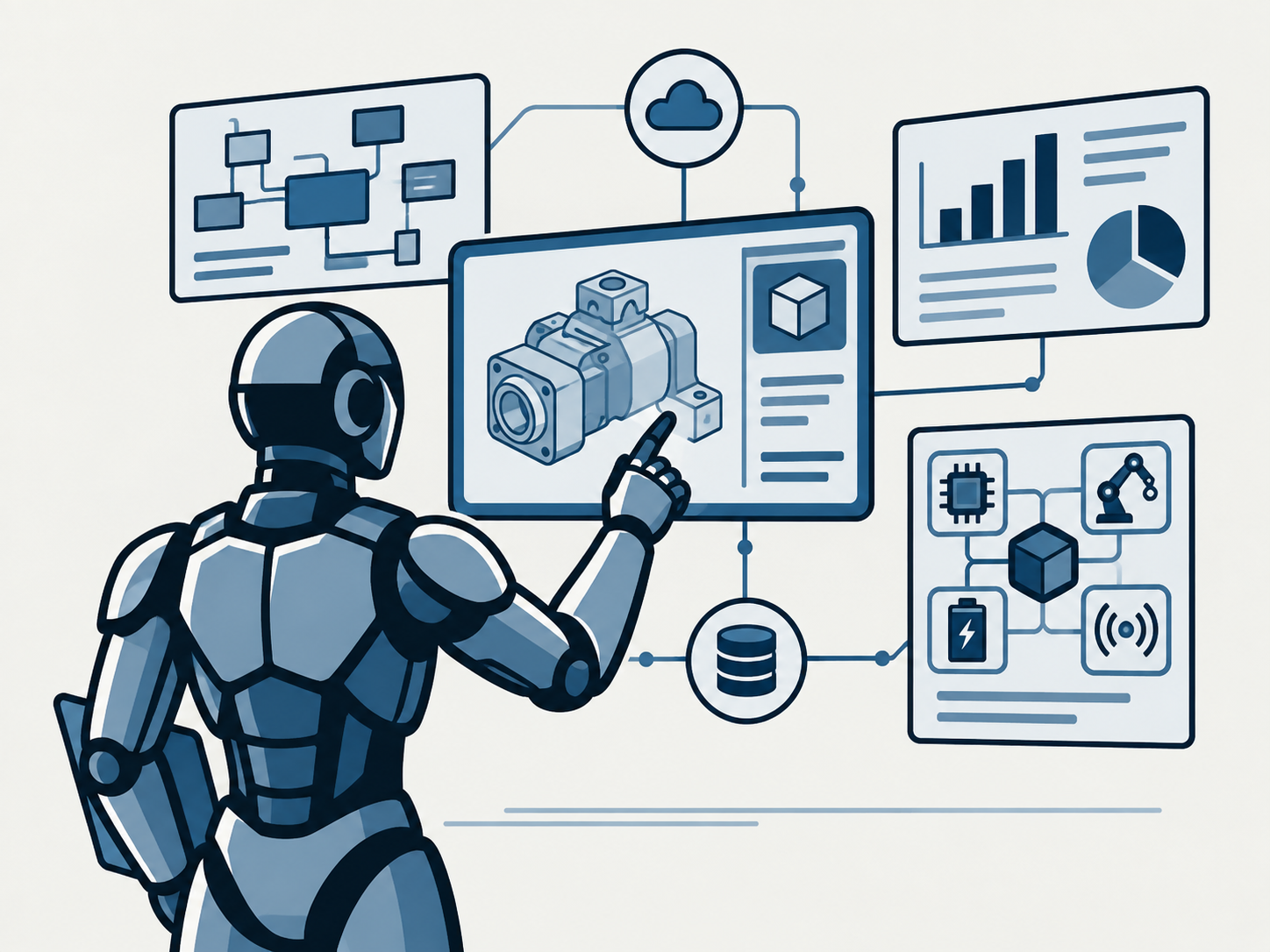
Representative visual for ongoing work in digital engineering, evidence, and technical decision support.
VAS began formalizing a configuration controlled development environment for semi autonomous robotics, engineering analysis, architecture, verification, and research documentation. The objective was to treat experimental work as disciplined engineering rather than disconnected prototypes.
Early demonstrator studies examined electric actuation, leg and joint geometry, mechanical packaging, balance sensing, runtime, power distribution, and system level integration for a scaled humanoid platform. The work established a concrete testbed for mechanical, electrical, software, and control system trades.
Research expanded into joint architecture, structural interfaces and couplings, actuator loading, modularity, packaging, and gait mechanics. The emphasis was on repeatable interfaces that support testability, maintainability, and later design iteration without exposing proprietary geometry or detailed implementation.
VAS evaluated robotic energy architectures beyond battery only operation, including battery buffering, supercapacitors, hydrogen concepts, hybrid power approaches, voltage distribution trades, and peak versus continuous load behavior. The goal was to understand endurance, mass, thermal, safety, and integration implications before hardware commitment.
Mobility research linked gait sequencing, balance, inertial sensing, actuator coordination, feedback control, and power efficient operation. Work focused on how mechanical design, embedded controls, and sensing must be engineered together for stable locomotion rather than optimized independently.
VAS explored the integration of inertial and environmental sensing with localization, state estimation, navigation, and closed loop control. The research treats navigation as a system function spanning sensors, compute, algorithms, actuator authority, and verification evidence.
VAS matured engineering workflows using local and hosted AI models, agentic tooling, controlled data separation, structured evidence, and human reviewed technical outputs. The objective is to accelerate engineering work while preserving traceability, configuration control, and accountable technical decision making.
Current work continues to integrate mechanical architecture, power, sensing, navigation, gait, embedded control, autonomy, verification, and AI assisted engineering into a common demonstrator program. The research program is deliberately phased to retire risk through modeling, prototyping, measurement, and evidence based iteration.